Faces of Mito

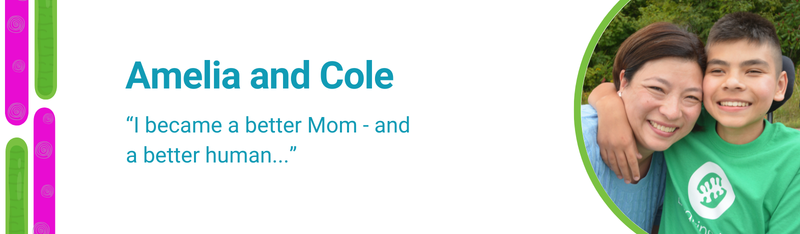
Amelia and Cole

“I became a better Mom – and a better human — when I stopped hiding and pretending my life wasn’t going to be how I imaged,” says Cole Pruchnicki’s mom, Amelia. “I had to look deep inside myself and choose to accept my own vulnerability and succumb to our reality.”

Amelia, her husband Gerard, and sons Ethan and Cole are a family living with mitochondrial disease. Cole started showing signs of mito when he was just a year old.

Regularly experiencing seizures, being rushed to hospital by ambulance on a weekly basis, and being generally weak were normal for Cole. This young man has had multiple diagnoses over the years, first with Complex 1 Deficiency, then Leigh’s Disease and now, Pyruvate Dehydrogenase Complex Deficiency.

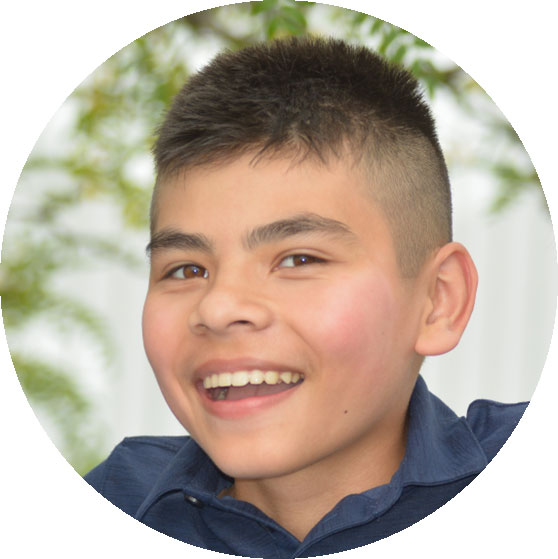
Headshot of Cole

Cole was 7 when Amelia accepted that her son had a disability and changes were necessary. “Once I accepted our reality, everything changed. I needed to advocate   for myself and my son, learn to ask the right questions, and take advantage of the supports that were available. We started asking for — and accepting — help. We moved to a smaller community where many services were suddenly at our door. The relief was incredible.”

Amelia says that when they moved from Toronto to a smaller community, she found her tribe.  She contacted the Children’s Treatment Network (https://www.ctnsy.ca/). It was there that she connected with other families who had children with different diseases but similar challenges. She asserts that it has been life-changing to connect with a support team of people who have similar challenges but are working towards the same goals.

The love and mutual respect between Amelia and Cole are beautiful to witness. Amelia describes her younger son as a bright, easy- going, adaptable 13-year-old boy with a wonderful brain that moves too fast for his mouth and tongue to keep up with, and who takes everything in stride. They gaze at each other frequently, swap teasing remarks, and constantly share smiles and giggles.

Cole can walk on his own but uses a wheel- chair when outside of the house. While he has an iPad for communication, Cole likes to talk and sing — a lot. Amelia says singing is entertaining, but it also helps his breathing by strengthening muscles that don’t work well when he is tired.

Both Amelia and Gerard work hard to promote independence and mobility.

They believe it is important to keep Cole active and engaged. “He was quiet for a long time – watching and learning,” says Amelia. “We could see he knew what was going on around him, but he didn’t have the energy to participate.”

Cole was in a regular class for a long time but is now in the Learning Centre. Centre moves at a slower pace and Cole has an Educational Assistant for scribing to clarify instructions and deliverables.

Cole isn’t comfortable asking for help. He doesn’t want to be a bother to people which means his needs often go unmet.

Lately, he has learned to advocate for himself. He now has the courage to ask the teacher to slow down, clarify statements and repeat information when needed. This is improving his ability to learn.

COVID has been helpful for Cole’s academics. Although he, like most kids, wants to see his friends, remote learning has helped him be more successful. While at home, he has the flexibility to rest when he needs to and do things that are good for him to preserve his energy. Working on his own schedule has allowed him to work inside his comfort zone.

Amelia and Gerard sometimes ask their parents to help so they can have a break and recharge. In the early days, this simply wasn’t possible. Even going for coffee or dinner was difficult because the couple didn’t want to burden their parents with the responsibility of Cole’s complex needs. They also didn’t want to be too far away in case Cole went into distress.

“It’s different now,” Amelia says with a smile. “Cole is more independent, has fewer episodes, and Ethan plays an important role in his brother’s care.” Getting away and having a rest is important. Being able to do the things you still love matters. Amelia notes that she and Gerard always feel reenergized and experience a deep sense of gratitude when they return home.

Amelia confesses that she used to hope that her boy would be stronger; be better. Cole’s older brother Ethan was always ahead of the curve. He was walking at 10 months, athletic, good looking, super cool. Amelia wanted Cole to be like him saying it was almost like a competition with friends — my success as a parent was tied to how my children performed. When I finally realized that it wasn’t fair, for me or Cole, to make that comparison,” says Amelia, “I was humbled. I had to learn to stop judging the kids and myself. This realization changed me. It has changed the way I look at life and choose to raise my children.”

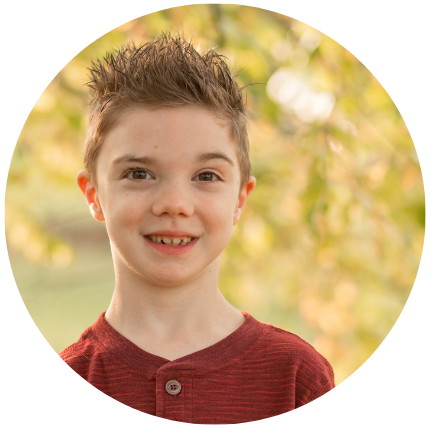
Cole and Ethan smile and pose outside in front of flowersEthan was only three when weekly visits from EMS were normal at the Pruchnicki home. Even at that early age, Cole’s older brother was watching, helping, and advocating for Cole. He would move the shoes out of the hallway to ensure there was a clear access path and unlock the front door.

Being Cole’s brother has made Ethan more mature and less judgmental. He helps grind medicine so it can pass easily through Cole’s g- tube, patiently waits when Cole needs extra time, and protects Cole from bullying.

He also accepts that ending visits or leaving events early is sometimes necessary. Amelia notes that they’ve stopped qualifying why they sometimes exit earlier than many other guests to remove any blame on Cole and that Ethan accepts his brother’s limitations.

Amelia will proudly assert that Ethan is very cognizant of Cole’s level of fatigue. He notices when Cole’s eyes get wobbly and he slurs his speech. Ethan knows this means Cole is tired and needs to rest. Although Amelia and Gerard ensure Ethan enjoys special opportunities created specifically for him, they soberly admit that if something happens to them, Ethan will be the only one with all the knowledge needed for Cole’s complex care.

“I had to learn to stop judging the kids and myself. This realization changed me. It has changed the way I look at life and choose to raise my children.”

Amelia offers the following words of wisdom for parents of children living with mito:

  • Seek out your tribe. When you are surrounded by the right people, life becomes easier – for everyone.
  • Don’t judge yourself or beat yourself up — it’s ok to be frustrated.
  • There will be problems that you can’t solve but it is important to keep to trying.
  • There is always hope. You can find solutions. They just may not look like you thought they would.

Amelia says she hasn’t wanted to look too far into the future because it stresses her out. She admits that not having answers is difficult but that as the days and years pass, they find new ways to cope and enjoy life.

What she does do, faithfully, is hope. Specifically, Amelia hopes for Cole to continue getting stronger and moving forward with little or no decline.

Today Cole is relatively healthy. Amelia credits much of Cole’s advancement in strength, which allows him to fully participate in and enjoy a fulfilling life, to managing his energy through a medically supervised ketogenic diet that is a low-carbohydrate, fat-rich eating plan where 60 – 70% of foods consumed come from“goodfats”. “Cole’seyessparklebrightly when he feels good,” says Amelia. “We don’t go off diet very often because the change in Cole’s energy is immediately impacted.”

The family works hard to set Cole up to succeed by making his environment safe and enabling him to do the things he wants to do because any gain in independence is a success. They want to push both boys towards the things that will be amazing for them; to seek out and discover what they are passionate about.

“I hope Cole continues to be a happy boy,” says Amelia. “Learning, laughing, and having the best life that he can. He has to own how he wants to live his life and we are here to support him.”

Marsha Crossman

It only takes one meeting with Marsha to be captivated her infectious smile. Right off the bat, you can feel her dedication and positivity.

Marsha has never allowed her shortcomings to limit her will to push forward. She always finds creative ways to be a part of the action!

Since her childhood, Marsha had to work twice as hard to keep up with her peers. The sports and activities she loved took an unimaginable toll on her body. She often questioned why this was the case but was never able to get the answers she needed until a minor mistake on a lab requisition changed her life forever.

By pure accident, Marsha’s family doctor checked off “CK” (Creatine Kinase, an enzyme that leaks out of damaged muscle). When Marsha’s CK levels were tested the results showed that her muscles were being destroyed by an abnormality.

This sparked Marsha to pursue unanswered questions as to why she was having this problem. Three years and four doctors later, Marsha was finally diagnosed with McArdle, a mitochondrial disease that manifests as a deficiency of muscle phosphorylase, causing fatigue and muscle pain during exercise in 2015.

Marsha was at a charity event for mitochondrial disease when she stumbled upon MitoCanada representatives and told them her story. After the event, MitoCanada helped Marsha obtain a referral for a metabolic specialist. Seeing this specialist helped Marsha manage her symptoms and understand what is happening with her muscles.

“Being properly diagnosed has given me peace of mind,” says Marsha. “Living my whole life without knowing the cause of my symptoms was challenging. Now that I know the reason for my symptoms, it is easier to move forward.

Marsha says her diagnosis, has given her a purpose in life. She wants to help people in her community get the care they deserve. Marsha is a pillar of the MitoCommunity in Saskatchewan. She helps put on numerous fundraising events and always makes herself available to the community. Marsha never loses hope because her efforts and work are justified by the increasing research for Mitochondrial disease.

Christine Knox

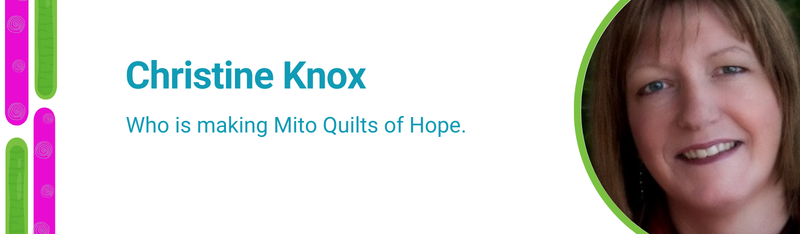
Christine Knox is part of an exclusive club. She, and only two other people in the world, have a type of mitochondrial disease caused by a rare mutation. For Christine, this means fatigue, issues with memory and concentration, migraines, hearing loss, chronic pain, dysautonomia, stroke-like episodes, atrial fibrillation, respiratory dyspnea, sleep apnea, gastrointestinal issues, tremors, and neuropathy in her legs.

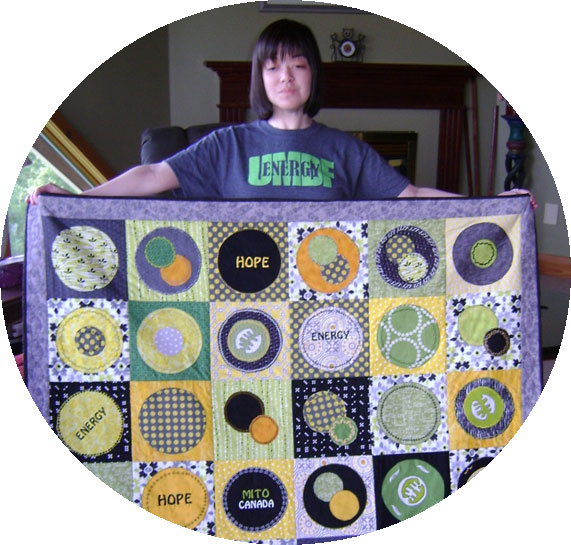
Christine also has a kind heart and passionate determination to raise awareness and provide comfort to others living with mitochondrial disease. In 2013, while working through her own diagnostic odyssey, Christine bravely founded Mito Quilts of Hope. This beautiful charitable project aims to give a custom quilt to every Canadian living with mitochondrial disease.

“I want to bring comfort to mito patients,” says Christine. “I am always cold and know how difficult it can be to maintain your body temperature when you’re not well. Quilts are the perfect gift!”

Every MitoQuilt is as unique as the person who receives it and serves many important functions. It embraces the beneficiary with MitoEnergy and provides physical comfort. It reassures its recipient that they are not alone but are supported by a larger MitoCommunity. It is an opportunity to Draw attention to the person and piece that can open new conversations to share personal stories and increase MitoAwareness that may save lives.

Reaching such a large group is no small undertaking.  Christine has enlisted the help of the quilting community from quilting guilds to churches to individuals. So far, Mito Quilts of Hope have embraced 250 individuals. Many more people are living with mito with thousands more at risk of developing the disease. Christine asserts that “every stitch  counts”. She is constantly searching for new recruits to help her make more quilts to help more people.

Christine holding up a mitochondria quiltThe Mito Quilts of Hope website has patterns, instructions and information on making or receiving this incredible gift. Every quilt has a label that indicates who made the quilt as well as when and where it was made to connect these special people.

MitoCanada has committed to helping Christine reach her dream of enveloping as many people who are living with mitochondrial disease as possible with a comforting MitoQuilt.

If you would like to help make MitoQuilts or know some one who needs one, visit MitoQuiltsofHope.org

If you would like to make a donation to be directed to Mito Quilts of Hope, please visit MitoCanada.org/donate

Go to Top