


Dave and Victoria Mosher
Victoria Mosher has a superpower. Wherever she goes, she brightens people’s day with her positivity and bright smile. Victoria’s sweet, affectionate nature and relentless optimism are undeniable despite the immense adversity she’s encountered throughout her life. Diagnosed with mitochondrial disease and autism, Victoria is non-verbal, relies on a G-tube for sustenance, takes a daily cocktail of supplements to ensure adequate nutrition, and faces physical challenges due to muscle weakness.
At 15 months old, Victoria had a high fever. Her parents took her to Credit Valley Hospital just to be safe, as she was a bit small for her age. “Within an hour or two, things went really badly,” says her dad, Dave, of Burlington, Ont. “She crashed. The doctors told her mother and me that we should call our parents and bring in support, which is code for ‘this isn’t going to end well.’”
Victoria’s blood work showed lactic acidosis – the accumulation of lactic acid in the blood, signalling a potential metabolic problem – and she was whisked to SickKids by ambulance. It was a harrowing experience. Doctors stabilized Victoria but she went into a week-long coma and when she woke up, she had a brain injury.
“She could no longer control her movements. She had to get a G-tube because she couldn’t swallow,” says Dave. “It was about as awful as can be. But I’ve never met somebody more determined than Victoria.” Putting forth immense effort, Victoria learned how to sit, then scoot, then crawl. Despite her newly-impaired motor skills, Victoria eventually learned to walk. “It took years, but she did it,” says Dave.
Doctors mapped Victoria’s DNA and figured out the genetic mutation she had. It took about four years before the family finally had a diagnosis: thiamine metabolism dysfunction syndrome type 4.
“When Victoria first got diagnosed, it was pretty scary,” says Dave. “As a parent, I felt helpless. And I felt like I owed the system for saving her life – which the SickKids medical team truly did, by diagnosing and treating her properly. That indebtedness to the health system motivated me to get into healthcare, which I now work in.”
This sense of earnestness, sincerity, and dedication perfectly highlights the type of person Dave is: a compassionate, grateful, and resilient individual who’s driven by a sense of purpose to make a positive impact in healthcare and who chose to be inspired by his daughter’s journey with a rare disease rather than allowing himself to be overwhelmed by despair or adversity. That’s not to say there haven’t been any hardships, of course.
Because she has autism, Victoria loves routine. She splits her time between her mother and her father’s homes. Victoria, her mother’s, and Dave’s daily schedule involves structured activities intertwined with caregiving responsibilities. Victoria’s supervision and seven daily G-tube feeds – complicate even simple tasks like mowing the lawn. “She needs careful supervision, so cannot be left on her own,” says Dave.
Although Victoria has graduated from high school, three times a week she participates in a day program which offers recreational opportunities for people with autism. “There’s a bit of a tendency for people with autism to be inwardly focused,” says Dave. “We want Victoria to be interacting with people and having adventures and new experiences. The day program gets her out in the world.”
At home, Victoria loves playing with puppets and stuffed animals, playing games on her iPad, and going on car rides and errands with her mom or dad. She’s also a huge fan of listening to music and watching music videos. “She loves all kinds of music,” says Dave. Victoria is perfectly content listening to her dad’s music – whether it’s Elvis Costello or the Rolling Stones – and she also enjoys pop music, rapper Pitbull, and whichever artist was featured most recently on Sesame Street. When she’s in the car and music isn’t playing, she reaches for the screen, eager to start it up.
“When you’ve got a child with special needs, you worry that people will look at them as a collection of their disabilities,” says Dave. “Victoria is so amazing as a person, and everybody who spends time with her just falls in love with her. When she graduated high school, all her teachers were sad that she was leaving because she’s so unrelentingly positive and happy and affectionate.”
While Victoria is incredibly loveable, Dave notes that it can be hard for people to get to know her. “Because she’s nonverbal and doesn’t write, she doesn’t really have a good way to communicate,” he says. “It’s hard to get to know her unless you spend time with her.”
Despite not speaking, Victoria communicates non-verbally. “She’ll show me what she wants,” says Dave. “For example, if the internet goes down and she’s playing with her iPad, she’ll come running to get me, take my hand, and pull me over to the iPad to show that the internet’s not working. Or if we’re at somebody’s house and she wants to leave, she’ll come and get me and hold my hand and walk me to the door. If that doesn’t work, she’ll bring me the car keys, and then her shoes, until I have a pile of things around me that represent leaving.”
Even when things don’t go her way, Victoria’s steadfast positivity and cheerful outlook on life remain intact. “I try to learn that from her,” says Dave. “She was just in the hospital recently, and they’re poking her to give her an IV and drawing blood. Those things hurt. But five minutes later, Victoria is laughing and smiling, being her cheerful self. Things just bounce off her. She always maintains her positive disposition. I only wish I could do that, too, sometimes.”
Dave rejects sympathy in favour of understanding and appreciation, highlighting the need for improved diagnostic processes and respite care. “It’s not easy to get a proper mitochondrial disease diagnosis,” he says. “One thing the MitoCommunity needs is for it to be easier to diagnose patients because getting a diagnosis is crucial. The second thing the community needs is respite. People living with mito need a lot of care. Having some sort of respite program where they’d be safe for a week at a camp, so caregivers could go on a trip to re-energize themselves, would be really helpful.”
One thing the MitoCommunity doesn’t need, according to Dave, is sympathy. “I’m so proud of Victoria,” he says. “I don’t want people feeling sorry for her.”
At nearly 22 years of age, Victoria should have the whole world ahead of her. But because of her diagnoses and complex medical needs, Dave worries about her future. “She requires 100% care,” he says. “As I and her mother get older, who will be there to provide that care?”
Despite his fears, Dave remains hopeful for a fulfilling future for Victoria outside their insular world, filled with new experiences. “I want to make sure that she’s out and meeting new people and developing relationships and having experiences,” he says. “That’s important.”
Having a child with mito has impacted Dave’s life in many ways, but most importantly, it has brought him immense happiness. “Seeing Victoria happy and playful brings me great pleasure,” he says. “I wish more people could get to know her and experience the joy that she can bring.”

 Before they knew what mitochondrial disease was, Dani and Ivars Leitis had what they considered to be the perfect family. Their daughter, Riley, was thrilled to have become a big sister at the age of seven, and baby Charlie (born June 4, 2021) was reaching all his milestones. “Everything in our lives was going well,” says Ivars. “We didn’t have everything, but we had it all.”


 The family went to Sauble Beach, Santa’s Village, Canada’s Wonderland, Niagara Falls, and a Blue Jays game. Charlie took a music class, spent life at a dance studio, and saw Riley dance in two recitals. “These are all things that we wouldn’t have felt safe doing had we known he was immunocompromised,” says Dani.


 On January 1st, Genevieve saw a New Year, and a few days later, she went on her first plane ride to Florida! There, we began to experience bottle refusal and some other signs that were concerning, such as vomiting and her overall muscle tone becoming weaker.


 Ever since she can remember, Alyson Maxwell has experienced chronic pain and near- constant headaches. Growing up in the ‘70s and ‘80s, Alyson knew she wasn’t quite like the other kids. “I used to randomly fall down the stairs – my legs would just give out,” she says. “I often tripped and my coordination was horrible. I’d play really hard with the other kids one day and then the next day I’d hang out on the couch with a book or play quietly by myself. I think that I knew, subconsciously, that I had to recharge my body.”
 Play is work for kids and Aiden and Landon have found the perfect workspace. They love playing in a bouncy castle that remained in the family basement after a birthday party! It helps Aiden move more and more independently. It’s also fun, soft, safe,surrounded by walls, and offers unintentional benefits like building core and grip strength.
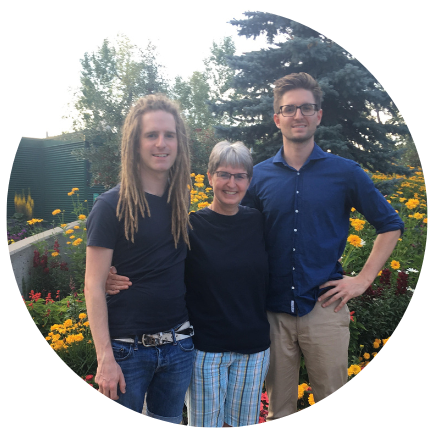 As a teenager, Zach felt he and his family were living in some strange sort of limbo. His brother also developed chronic fatigue. They knew that what they were experiencing wasn’t normal but there was no infrastructure in place to put them on the radar. Zach tried constantly to advocate for his family but was unsuccessful at getting them the care and support they needed.
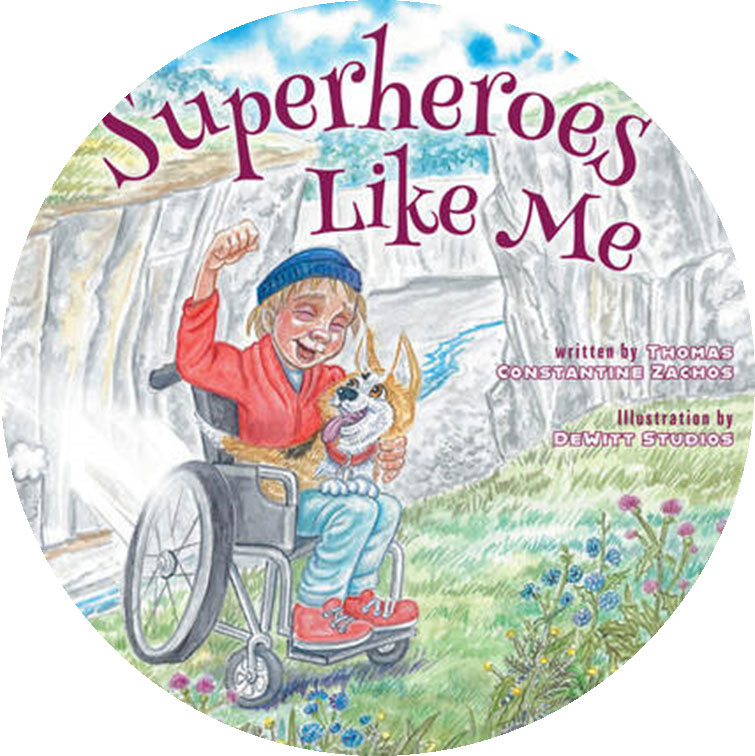 Thomas is one of those exceptional people we cannot forget. His strength, attitude and kindness are apparent and admirable. He’s brought all those qualities into, Superheroes Like Me, a beautiful story written by Thomas. He says he wrote it because he wants to change how people look at those with disabilities. He wants to ensure that everyone is seen for the person they are on the inside and for children to embrace the truth that everyone can use their unique strengths to be their own kind of Superhero.
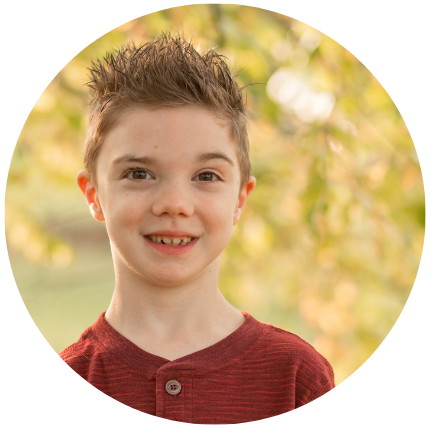 When Walter didn’t pass an auditory test, the real search for answers began. “The first diagnosis we were given was cerebral palsy,” says Erin. “I remember being angry and feeling like we’d been brushed off after a very short consult. I was convinced the diagnosis was wrong. Although I did not believe my son had cerebral palsy,” adds Erin, “I did know that he needed help.”
 Life is good but not easy for Walter, who is now eight years old. He has braces to help him walk and sometimes needs to use a walker. He struggles with fine motor skills and lacks muscle control in his mouth, so he speaks slowly. And, when Walter gets sick with common colds or ailments, it takes him much longer to recover.
