



Community Corner with John Fisher
Dear MitoCanada Community Members
My name is John Fisher, and I am the President & CEO and sole shareholder of a niche environmental and occupational health and safety consulting firm with offices in Ontario and Quebec. Personally, I live in Mississauga, have been married to Diane for almost 39 years and am a proud father of three young men. I certainly am lucky as Diane was able to see beyond the physical characteristics even before I had the mito diagnosis. I also take great pride in obtaining my MBA in 2021 at the age of 59.
I was diagnosed with mitochondrial myopathy in 1982. When I was informed of this diagnosis, I was told that I was 1 in a million. During my muscle biopsy, I had my eyelids attached to my eyebrow muscles to prevent my eyelids from drooping again. It was later conveyed to me that I had CPEO. Being diagnosed with mito over 40 years ago allows me the latitude to reflect on what life with mito has been for me. To put it simply, it has provided challenges. I have experienced ignorance and discrimination because of the way I look and sound. I have not been able to perform functions to the degree of success I would have liked from a sports and physical strength perspective. While I know my condition is affecting me as I age (Chronic and progressive), I also subscribe to the fact that this is also a function of aging. Thus, it is hard to differentiate which is having the greatest effect.
I am a “why not me” person. I have not let my “disabilities” stop me from achieving what I want to achieve. I recognize that some of this has not been possible because of my diagnosis and the realities of my body, but having this condition has emboldened me to show people why they are wrong in their assumptions or perceptions. I currently sit on two boards and chair and co-chair numerous committees. I am currently chair of the board of an organization that provides support services to adults with developmental disabilities. This cause is very dear to me as someone who has been deemed to be of the same persuasion at times.
To be totally vulnerable and candid, there have been times when I have questioned my own abilities. I have suffered from “imposter syndrome” on occasion. I no longer play golf as I don’t have the capacity to hit the ball to an extent that does not cause considerable embarrassment for me. I get frustrated when I clearly enunciate in my head the words I am trying to articulate, but I know the person receiving the message has no idea what I am speaking about. I am totally averse to picture taking as seeing my mouth open in so many pictures is another form of embarrassment for me and does not portray who I think I am.
Some of the above has dissipated since becoming aware of MitoCanada. I have come to appreciate the educational and advocacy aspect of the organization. But more importantly, the sense of community that is being built. On this basis, I am becoming an active participant by giving my time and money to the cause, and I don’t look at the organization from my own specific needs but those of the community. I would suggest there is comfort in knowing there is a group like MitoCanada advocating for those who may not be able to do so on their own. Life is good, and being diagnosed with a mitochondrial disorder does not mean you can’t live a very productive, successful and happy life.
John
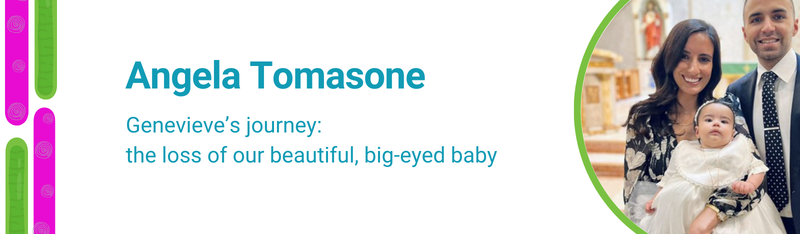
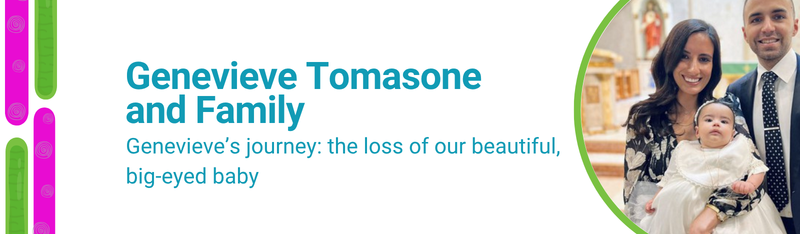
 On a Sunday morning in early December 2021, the pregnancy test read positive. I went into our bedroom, and my husband, Michael and our dog, Timmy, started jumping in the bed out of excitement when I shared the news. I was blessed to have an easy pregnancy—she treated me so well.
 On January 1st, Genevieve saw a New Year, and a few days later, she went on her first plane ride to Florida! There, we began to experience bottle refusal and some other signs that were concerning, such as vomiting and her overall muscle tone becoming weaker.




 Ever since she can remember, Alyson Maxwell has experienced chronic pain and near- constant headaches. Growing up in the ‘70s and ‘80s, Alyson knew she wasn’t quite like the other kids. “I used to randomly fall down the stairs – my legs would just give out,” she says. “I often tripped and my coordination was horrible. I’d play really hard with the other kids one day and then the next day I’d hang out on the couch with a book or play quietly by myself. I think that I knew, subconsciously, that I had to recharge my body.”
 Play is work for kids and Aiden and Landon have found the perfect workspace. They love playing in a bouncy castle that remained in the family basement after a birthday party! It helps Aiden move more and more independently. It’s also fun, soft, safe,surrounded by walls, and offers unintentional benefits like building core and grip strength.
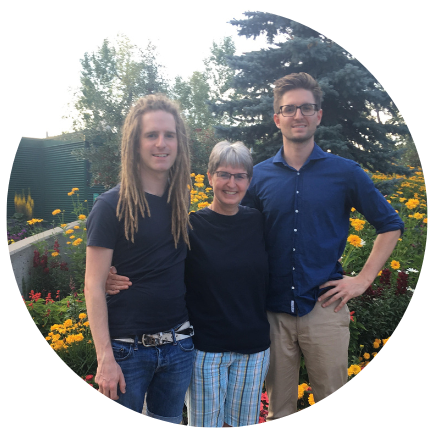 As a teenager, Zach felt he and his family were living in some strange sort of limbo. His brother also developed chronic fatigue. They knew that what they were experiencing wasn’t normal but there was no infrastructure in place to put them on the radar. Zach tried constantly to advocate for his family but was unsuccessful at getting them the care and support they needed.
