How do I know if I may have mitochondrial disease?
Mitochondria are the tiny powerhouses inside nearly every cell in the body. They turn the food we eat and the oxygen we breathe into the energy our organs need to work properly.
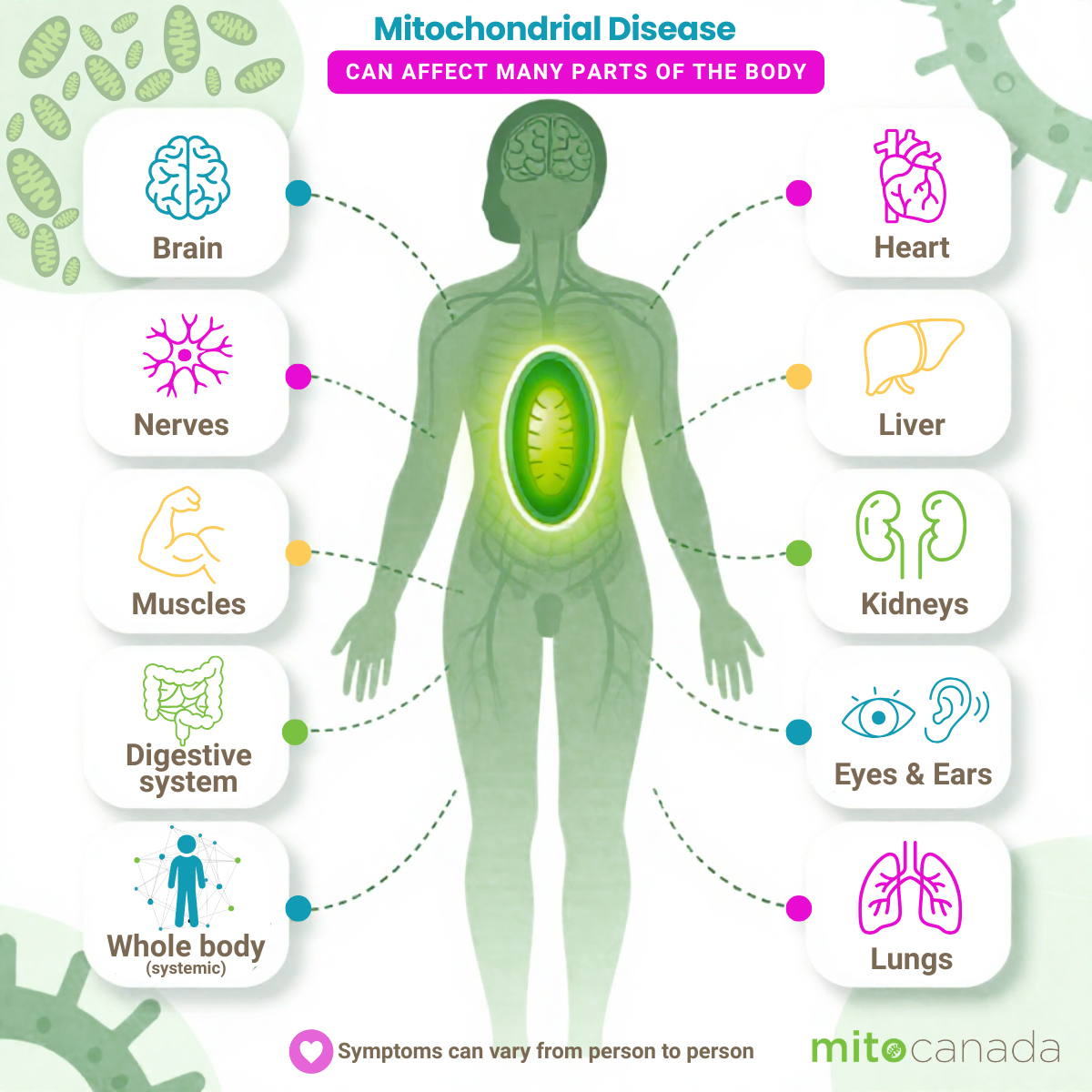
When mitochondria are not working as they should, the body may not have enough energy to support important functions. Because energy is needed everywhere, including the brain, muscles, heart, nerves, digestive system, eyes, ears, liver, and kidneys, mitochondrial disease can look very different from person to person.
For some people, symptoms may be mild or come and go. For others, symptoms can affect many parts of the body and have a serious impact on daily life.
Who may be at risk?
Mitochondrial disease can affect children, teens, and adults. It is often difficult to recognize because symptoms can overlap with many other conditions, and people may see several specialists before getting answers.
You may want to explore mitochondrial disease with a healthcare professional if you or someone you love has unexplained symptoms affecting multiple body systems, such as muscle weakness, seizures, migraines, digestive issues, vision or hearing loss, heart concerns, fatigue, balance problems, or developmental delays.
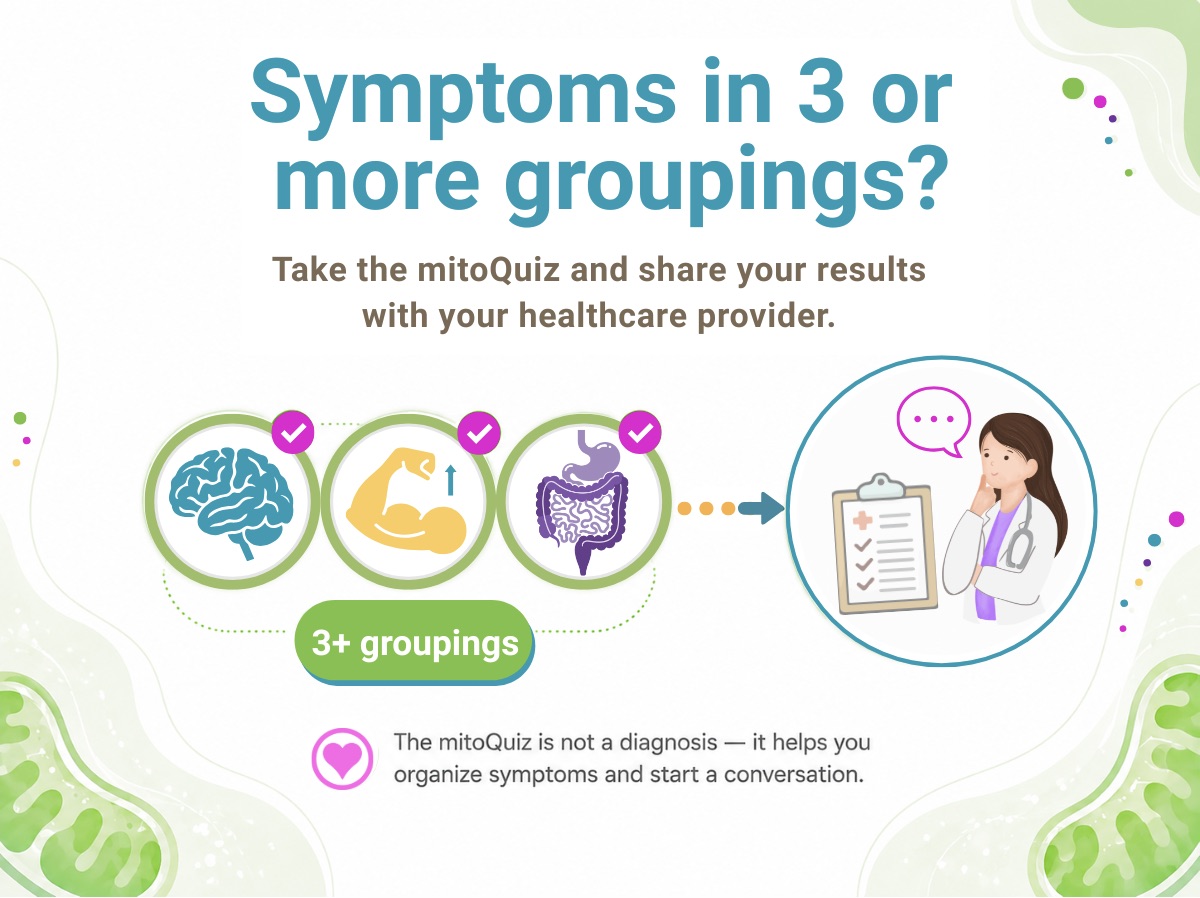
Take the mitoQuiz
The MitoCanada mitoQuiz is a simple tool to help you organize symptoms and start a conversation with your healthcare provider.
It is not a diagnostic test and it cannot tell you whether you have mitochondrial disease. But it may help you notice patterns, especially when symptoms appear across several parts of the body.
If you check symptoms in three or more groupings, consider printing or saving your results and sharing them with your doctor or specialist at your next appointment.
You do not have to navigate this alone
MitoCanada exists to support people and families affected by mitochondrial disease through education, awareness, support, and research. If you are searching for answers, we hope this quiz helps you feel more prepared to take the next step.