MitoCanada

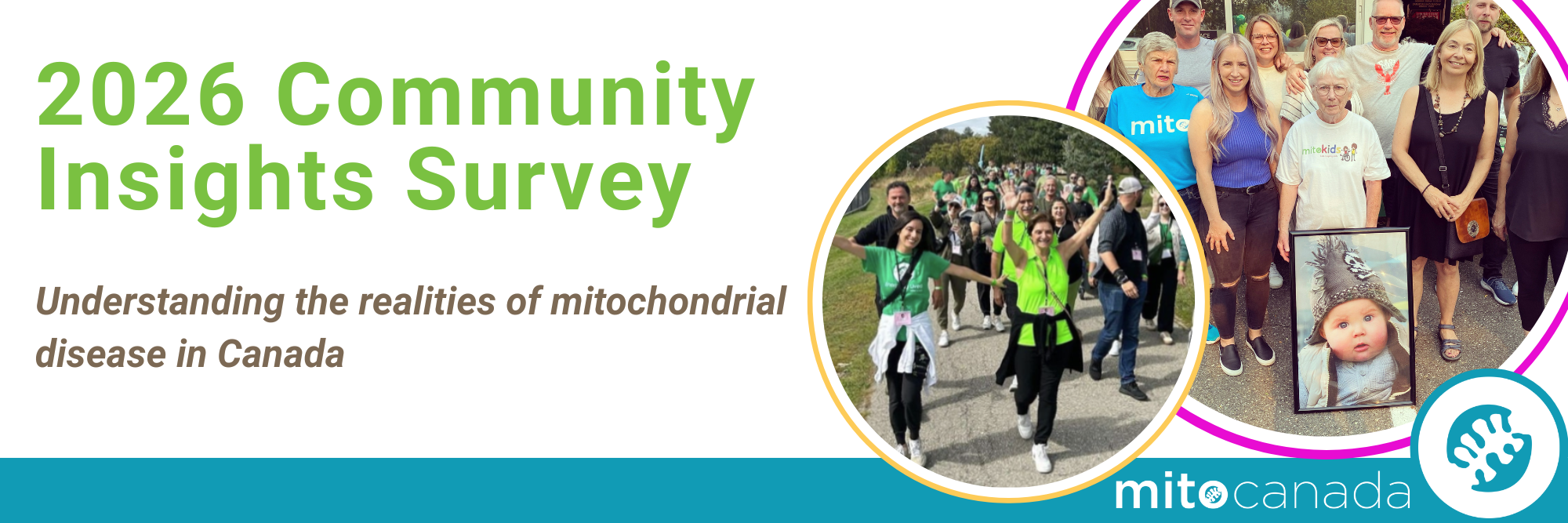
MitoCanada’s 2026 Community Insights Survey

MitoCanada’s NEW Community Insights Survey

At MitoCanada, the voices of patients, families, caregivers, and researchers guide everything we do. To continue building programs, resources, and advocacy efforts that truly reflect the needs of our community, we launched our Canadian Community Insights Survey in 2025.

The results from this survey will directly shape our 2026 Canadian Community Insights Report, a key tool for understanding the realities of mitochondrial disease in Canada and driving change where it’s most needed.

Why Your Voice Matters

This survey was carefully designed in collaboration with individuals living with mito, parents and caregivers, and researchers. Each group provided input and guidance to make sure the questions capture what matters most.

By taking part, you will help us better understand:

  • Demographics of Canada’s mitochondrial community

  • The diagnostic journey and its challenges

  • The current mitochondrial disorder landscape

  • Experiences with the therapeutic landscape

  • Interest in clinical trial and research engagement

  • The quality of life impacts of living with mito

Your responses will fuel our efforts to advocate for better care, advance research, and support families across Canada.

How to Participate – Take the Survey

Click the link below to take the survey. On average, it takes about 12 minutes to complete, and your insights will have a lasting impact on the future of mitochondrial disease support and advocacy in Canada.

To recognize and honour the journeys of those we’ve lost, we’ve created a dedicated survey for families who have experienced loss. By sharing your experiences, you’ll help strengthen support for families and caregivers, and shape the future of research, advocacy, and care

Together, We Can Make a Difference

Every voice in our community matters. By sharing your experiences, challenges, and hopes, you’re helping us create a world where all lives are powered by healthy mitochondria.

Thank you for being part of this important work.

If you would like to learn more about our Community Insights Reports, we invite you to read our 2022 Community Insights Report

MitoCanada’s First Community Insights Report

MitoCanada’s First Community Insights Report

MitoCanada’s 2022 Community Insights Report brings together findings from a national consultation designed to better understand the needs of the Canadian mitochondrial disease community. Through interviews and survey data, the report highlights the complexity of the diagnostic journey, variations in treatment approaches, and the significant physical, emotional, and financial impacts of mitochondrial disease.

Key insights reveal long and often delayed diagnoses, particularly among adults, high reliance on individualized treatment strategies such as the mito cocktail, and widespread impacts on quality of life, including fatigue, muscle weakness, isolation, and loss of independence.

The report also identifies strong community demand for improved education, support, and advocacy.

This report is grounded in the voices of the Canadian mito community. Through a combination of one-on-one interviews and a national survey, MitoCanada engaged individuals living with mitochondrial disease, as well as parents and caregivers, to better understand their lived experiences.

The consultation was developed collaboratively with patient-partners, caregivers, and researchers to ensure that the questions reflected real community priorities. Participants from across Canada contributed, helping to build a national picture of the challenges and opportunities facing those affected by mitochondrial disease.

Read the full report to learn more about how the consultation was conducted

The consultation provides valuable insight into the composition of the Canadian mito community. Most participants were either adults living with mitochondrial disease or parents reporting on behalf of their children. The community is largely concentrated in urban centres, though access to care in rural and smaller regions remains an important consideration.

Age distribution shows two key groups: children aged 6–12 and adults aged 45–54. Over half of participants reported no known family history of mitochondrial disease, highlighting the complexity and variability of these conditions.

Read the full report to explore detailed demographic insights

The path to diagnosis varies widely, and is often prolonged. While some children are diagnosed within one to three years, many adults experience diagnostic journeys exceeding seven years.

Participants reported a range of diagnostic methods, including genetic testing, muscle biopsy, and biochemical testing. Even among those without a confirmed diagnosis, many continue to pursue testing or are treated based on symptoms. These findings highlight the need for improved awareness, earlier recognition, and more streamlined diagnostic pathways.

Read the full report to better understand diagnostic challenges and timelines

Treatment approaches for mitochondrial disease are highly individualized. The majority of participants reported being prescribed the mito cocktail, though perceptions of its effectiveness varied.

In addition to supplements, many individuals rely on therapies such as physiotherapy, occupational therapy, and exercise to manage symptoms. Exercise, in particular, was identified as one of the most helpful strategies, though it must be carefully balanced with rest due to fluctuating energy levels.

Financial burden is also a key issue, with many individuals paying out-of-pocket for treatments due to inconsistent provincial coverage.

Read the full report to explore the treatment landscape and access challenges

Mitochondrial disease has a profound impact on quality of life, both physically and emotionally. Muscle weakness and fatigue were identified as the most significant physical symptoms, while isolation, loss of independence, and helplessness were among the most commonly reported invisible impacts.

Families often face difficult trade-offs, including financial strain from medical costs and lifestyle adjustments to support care needs. These findings reinforce the importance of holistic support systems that address both medical and psychosocial challenges.

Read the full report to understand the full impact on daily life

Community members rely on a variety of sources for information, with MitoCanada identified as a primary and trusted resource. Interestingly, fewer participants reported relying on specialists for condition-specific education.

When asked about future needs, three clear priorities emerged:

  • Community support
  • Advocacy, and
  • Education

These areas reflect a strong desire for connection, improved awareness, and access to reliable, practical information.

Read the full report to explore community priorities in detail

Based on the insights gathered, MitoCanada identified several key areas for action, including:

  • Increasing public awareness of mitochondrial disease
  • Improving physician education to support earlier diagnosis
  • Developing practical disease management tools
  • Strengthening community connections
  • Advancing patient-centred research
  • Addressing inequities in access to care and coverage

These recommendations provide a roadmap for improving outcomes and ensuring that future efforts are aligned with community needs.

Read the full report to review all recommendations and next steps

This report reinforces a powerful truth: individuals and families living with mitochondrial disease are the true experts in their experience. Their voices highlight both the challenges they face and the opportunities to improve care, support, and research.

MitoCanada remains committed to listening, learning, and acting on these insights to help improve the journey for the mito community across Canada.

Read the full report to explore the complete findings

Go to Top